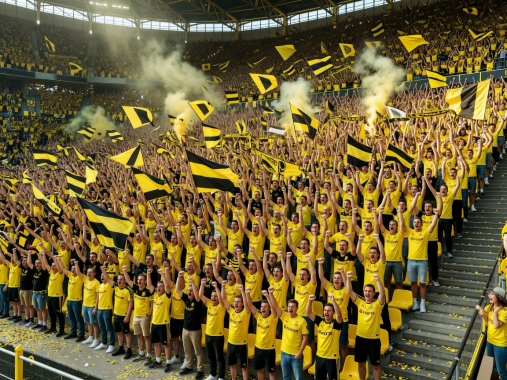
1. The Yellow Wall (Die Südtribüne) Geometry
The architectural centerpiece of Signal Iduna Park is the renowned Südtribüne (South Stand). Measuring 100 meters wide, 40 meters high, and pitched at a steep 37-degree rake angle, it stands as Europe's largest single standing terrace with an unseated capacity of 24,454 supporters.
Unlike tiered modern arenas that segment spectator density across intermediate hospitality levels, the Südtribüne functions as a monolithic acoustic sound wall. The 37-degree incline places the top terrace rows directly above the lower rows, creating an acoustic wall effect where vocal reverberations from chant leaders (Capos) reach the opposite north goal in less than 0.32 seconds.
Acoustic Dynamics & Decibel Amplification
During high-stakes Bundesliga and UEFA Champions League fixtures, acoustic engineers have logged sustained decibel readings between 128.5 dB and 130.5 dB on the pitch surface. This approaches the acoustic sound pressure level of a commercial jet aircraft engine at takeoff (140 dB) and significantly impacts visiting team tactical communications.
2. Structural Steel Engineering & 62m Support Pylons
Originally constructed for the 1974 FIFA World Cup with a modest 54,000 capacity, the stadium underwent three major expansion phases (1995–1999, 2002–2003) designed by the architecture firm Architekten Schröder Schulte-Ladbeck.
To expand the upper tiers without obstructing interior pitch sightlines with vertical columns, engineers installed eight bright-yellow 62-meter high steel tubular pylons on the exterior perimeter of the stadium. These external pylons anchor thick steel suspension stay cables that carry the weight of the massive cantilevered roof canopy.
- Cantilever Extension: Roof spans up to 48 meters into the bowl without interior support pillars.
- Structural Weight: Over 3,500 metric tons of steel support the expanded roof modules.
- Corner Infill Engineering: Enclosed the four corners, boosting total capacity to 81,365 and locking acoustic pressure within the bowl.
3. Dual Seating Configuration (Bundesliga vs UEFA)
A unique requirement of German stadiums is the fast-conversion rail-seating mechanism. Because UEFA regulations historically forbade standing terraces for international competition, the Südtribüne incorporates fold-down bucket seats concealed beneath protective steel tread-plates.
Within 48 hours following a Saturday domestic match, Dortmund operations teams convert the 24,454 standing terrace into a 10,600 all-seated international terrace, reducing the stadium's total capacity from 81,365 to 65,851 for Champions League fixtures.